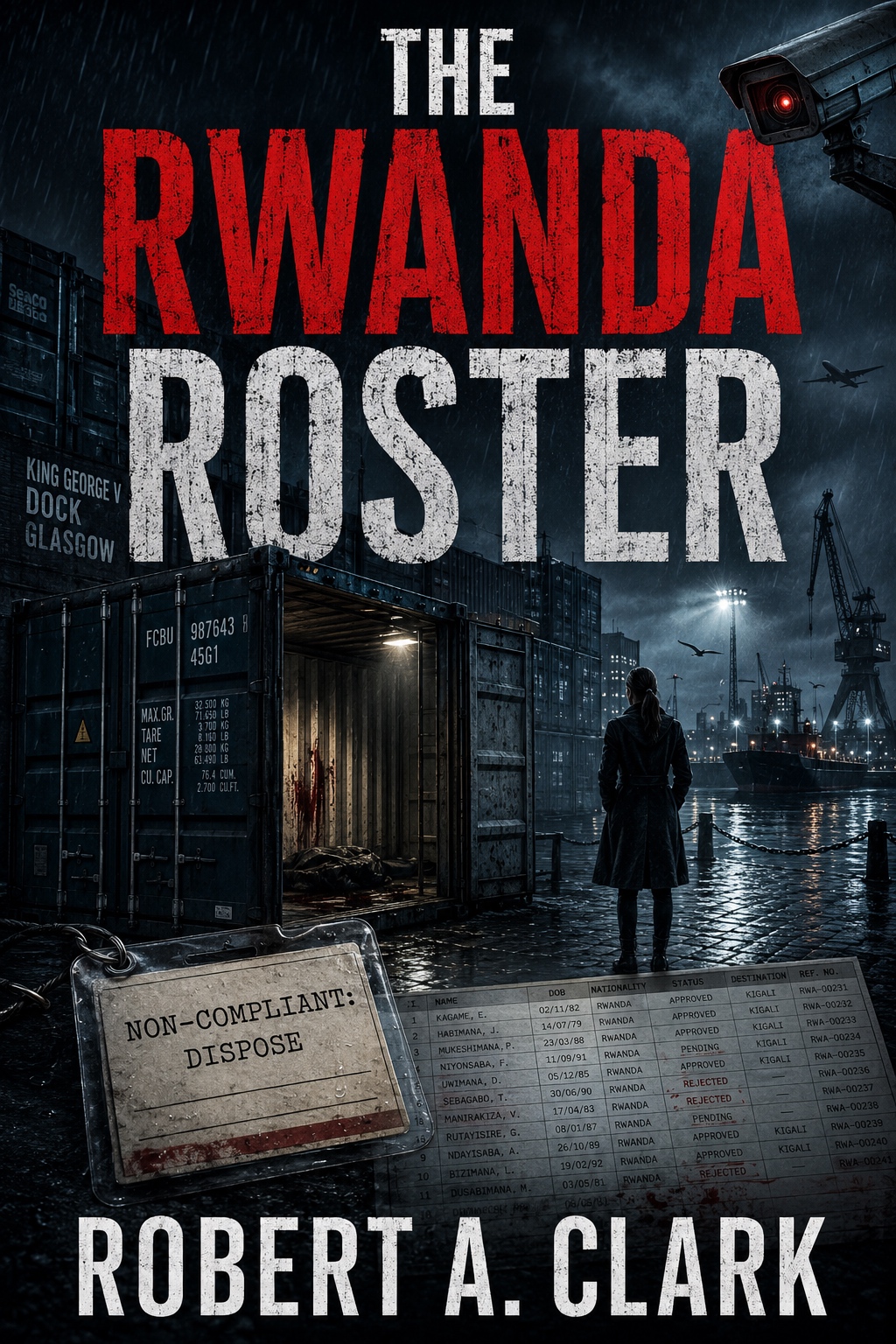
The Rwanda Roster
A detective and lawyer expose a secret system that murders asylum seekers to save costs, marked by a chilling card reading "NON-COMPLIANT: DISPOSE".
View Available FormatsAbout This Case:
The Rwanda Roster
When a body washes up in a Glasgow dock, DS Iona Khatri finds a laminated card in his pocket: NON-COMPLIANT: DISPOSE, in Comic Sans. The dead man was a deportee who never arrived. The card isn't a joke—it’s a tag for a hidden system that turns people into line items.
Khatri uncovers the Rwanda Roster, a spreadsheet where the unreturnable are costed and "resolved" by a private network of contractors, civil servants, and a minister's cousin. The state doesn't kill them—it disappears them through clean paperwork, sea lochs, and a quiet retainer. Teaming with disgraced solicitor Alistair Ross, Khatri races to expose the machine before it closes around her—and finds her own name on the roster.
From a Prestwick warehouse to a cove of bones, they trace a supply chain of indifference that costs nothing and remembers everything. When the system is the killer, how do you put a spreadsheet in the dock?
Reader Reviews
What Readers Are Saying
The Rwanda Roster is a chillingly plausible descent into the machinery of state-sanctioned erasure. Bob Clark elevates the standard thriller into a profound meditation on how modern bureaucracy transforms human beings into mere data points on a spreadsheet. Watching DI Iona Khatri uncover a system that operates with lethal, cold logic is both harrowing and intellectually gripping. Clark’s prose is lean and precise, perfectly matching the clinical nature of the systemic "disposal" process he explores. What stays with you is not just the plot, but the terrifying reality that spreadsheets, once configured, can disappear individuals without a single human hand needing to hold a weapon.
Mong CjThis is a fantastic mystery novel; I’m a sucker for mysteries or stories that revolve around a death and open the book with a POV chapter revolving around the victim of said death and The Rwanda Roster is one of the best examples of that I’ve read lately. The haunting description of this man drowning in the opening chapter really sets the tone for the rest of the novel, and that prose is carried on throughout the book, some of the descriptions and scenes set in the text left me speechless such as the immediate aftermath of the aforementioned dead man, who was described in such a way that gives you just enough morbid detail for your mind to fill in the blanks, a fine line in writing that makes the scene just so much more gruesome in your mind’s eye. This kind of beautiful text is integral to a mystery, I always think back to private investigator noir stories I read when I was younger when I approach a new novel that has the same setup: dark atmosphere, the borderline on horror, the societal commentary, and how a job like this can effect you. I remember one moment in the book where the main character laments how “clean” a murder is compared to the conspiracy she’s stumbled upon, despite that murder being horrible in its own way she’s kind of desensitized. This constant dark inner monologue is just what I love about these kinds of novels so much.
DLamesDark. Foreboding. Grim. And – could it really be happening? Those are all thoughts that come to mind reading this captivating tale set in Scotland of murder and a system that makes it all seem like simply balancing the books. After a drowned body turns up in a shipping container, Detective Inspector Iona Khatri discovers the death was not an accident, but her superiors tell her to stand down and avoid the case altogether. Knowing this means higher, powerful forces at play, she goes against orders and begins investigating anyway. Along the way, she uncovers a complicated bookkeeping process that quietly “disposes” of unwanted immigrants who become lost in the system, neatly hiding what happens so they simply disappear. And no one looks for them, since the layers of spreadsheets are balanced and show nobody is missing. With immigration a huge issue worldwide, this story offers an unsettling “what if” scenario as a solution to a complex situation. It’s also a solid, tense police procedural, focusing on Khatri as she pursues the case and slowly uncovers one chilling revelation after another, even as her own life is threatened. Filled with fully developed characters, the novel provides a powerful, thought-provoking look at immigration and doesn’t shy away from its harsh realities. If you like detective stories mixed with an unflinching look at a controversial subject, this book is well worth reading.
Mike Johnson